

Dyson examined the common toothbrush and decided it must be enhanced with a camera. And not one of those metaphor cameras — a real 100k-pixel lens, within inches of your teeth, sending video straight to your mobile.
That’s the Dyson CameraJet, and it runs for roughly the same amount as a good set of noise-canceling headphones. I spent the last few days rummaging through the spec sheet, the initial hands-on stories, and the internet’s overall “wait, why does my toothbrush need Wi-Fi” response. Here’s the full story, no frills, just what it can do and if it’s worth the premium.
What Is the Dyson CameraJet?
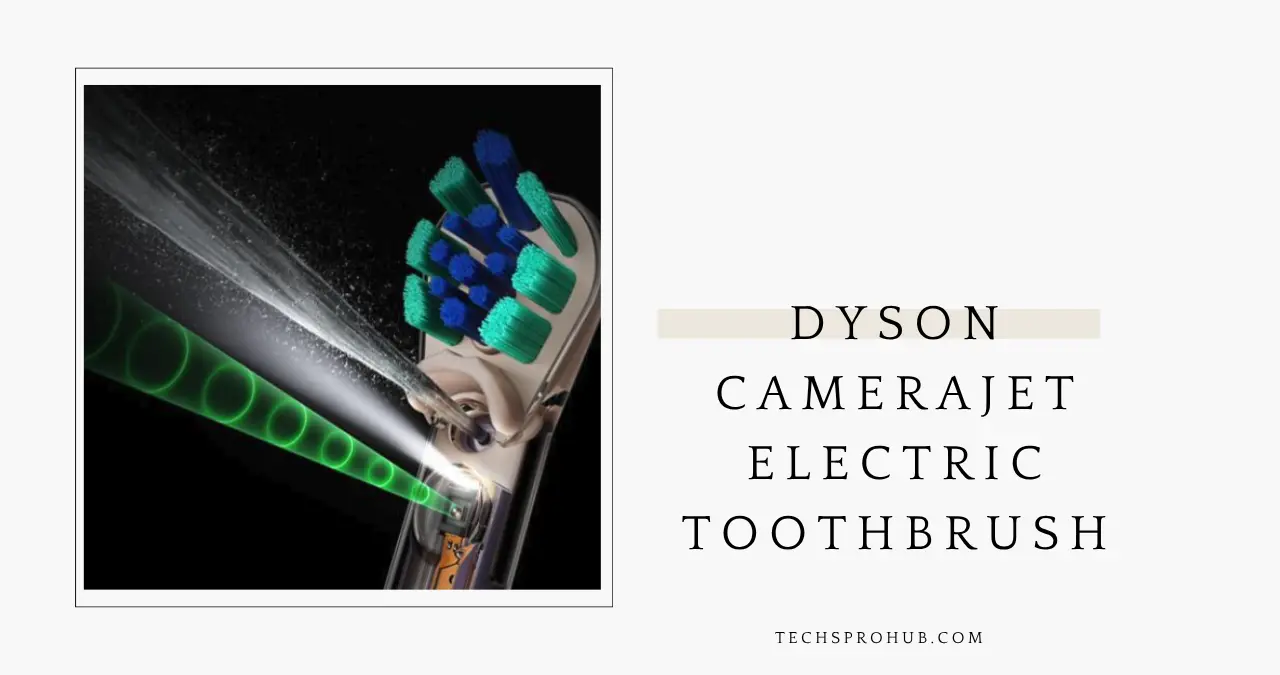
The Dyson CameraJet is an electric toothbrush equipped with a built-in camera and water-jet flosser that automatically directs rinse into the gaps between your teeth as you brush. Dyson calls the system Gap Optical Targeting: it identifies the interdental spaces and fires a precisely placed jet of rinse into them.
It launched on September 1, 2026, and is priced at $499 in the US, available in Ceramic Ultra Blue and Ceramic Pink. This isn’t a quick, rushed side project either. Dyson says CameraJet is the result of six years of research and engineering, and frankly it shows in how many moving parts — literal and algorithmic — are crammed into the handle.
How Gap Optical Targeting Actually Works
This is where the CameraJet really differs from the market equivalent, the toothbrush. Hidden inside the brush head is what Dyson refers to as a 100k-pixel macro lens camera, a very small endoscope, which scans inside your mouth while you brush.
Dyson breaks the pipeline into three steps:
- Sees — the camera takes dozens of frames a second inside your mouth
- Thinks — a machine-learned model trained on a huge number of dental images determines where the gaps between your teeth actually sit
- Jets — a cone of liquid fires directly down into the gap, flushing out plaque before it can build up
Engadget’s early coverage put the gap-detection system at dozens of millions of lines of code, running a model trained on hundreds of thousands of dental images gathered during development. And it doesn’t hesitate — Dyson claims detection and jetting happen within 100 milliseconds of the camera spotting a gap.
Which makes it seem pretty excessive for a toothbrush, doesn’t it? However, most of us don’t bother to floss at all, so a mid-brush auto-flosser isn’t such an awful concept for Dyson.
Sees, Thinks, Jets: The Hardware Breakdown
The camera and the target lens
The macro lens is mounted behind a dome-shaped target lens designed to expand its field of view, with a stroboscopic light for uniform illumination in a very confined, moisture-rich space. Dyson makes no bones about the fact that it only turns on during auto-jetting or while using live-view mode in the app. It does not record continuously.
The conical jet and anti-gravity tank
In place of a needle-style jet found in traditional countertop water flossers, Dyson created a conical jet that shoots out as much as 0.15ml of liquid in a single burst. The reservoir uses what Dyson calls an “anti-gravity” design: a diaphragm that, when compressed, pushes the liquid out regardless of the angle the brush is held at, which matters a lot when you’re trying to reach your back molars.
The brush head
The twin-bristle head is designed to hug the gumline and lift surface stains, and it’s RFID-tagged, so the handle knows when it’s worn out and nags you to swap it. One catch worth flagging early: the brush only works properly with genuine Dyson heads, so factor replacement costs into what you’re really paying long-term.
The motor
Most sonic brushes get stuck — the bristles catch on a tooth mid-stroke, mainly in hard-to-reach areas, and stay there vibrating uselessly instead of cleaning. Dyson’s solution is what it calls variable sonic oscillation: it keeps varying the brush angle so the bristles never stall and stay constantly in motion. Dyson claims this removes up to 69% more plaque than comparable premium powered toothbrushes in those hard-to-reach areas — a number worth taking with a pinch of salt, since it’s the company’s own lab result.
What’s in the Box (and What It Actually Costs)
At $499.99, this is too costly to be an impulse purchase. It’s more like buying a second phone, this time for your mouth. Here’s what’s included, according to the official listing:
- Dyson CameraJet toothbrush handle with flosser
- 3-in-1 charging dock with internal refill reservoir
- Travel case
- Two dual-bristle brush heads
- Waterproof USB-C to pogo-pin charging cable
- A swappable lithium-ion battery
Battery life is rated at up to 10 days on one charge, assuming brushing twice a day plus one auto-jet session. It’s IPX7 water-resistant, so a shower won’t kill it. The whole system is built around foam interference, so you’ll need non-foaming, SLS-free toothpaste and mouth rinse to go with it. You’re essentially buying into the Dyson ecosystem here, not just the brush.
If you already own a shelf of smart home gadgets, this will feel familiar: more automation, one more subscription to keep track of.
Dyson CameraJet vs. Regular Electric Toothbrush vs. Manual + String Floss
| Dyson CameraJet | Standard Sonic Toothbrush | Manual Brush + String Floss | |
|---|---|---|---|
| Price | ~$500 | $30–$300 | Under $20 |
| Flosses automatically | Yes, via AI-targeted jet | No | No — separate step |
| Gap detection | Camera + AI | None | None |
| App/live-view | Yes, via MyDyson app | Varies (some models) | No |
| Anti-stall bristle motion | Yes (variable sonic) | Varies by model | N/A |
| Ongoing costs | Brush heads (Dyson-only) + toothpaste/rinse | Brush heads | Floss + toothpaste |
| Best for | People who never floss and want it automated | Solid daily clean on a budget | Minimalists, budget-conscious users |
The gap this table fills that most of the early coverage skips: if you’re already a disciplined flosser, the CameraJet’s headline feature solves a problem you don’t have. Its real audience is the roughly two-thirds of people who skip flossing altogether.
Is a Camera in Your Mouth Truly Private?
Fair question — it was the first one every early hands-on reviewer raised. Dyson’s short answer: the camera only activates for live-viewing or auto-jetting, a white LED shows when it’s on, and the video feed goes straight to the MyDyson app without being saved on the brush itself or uploaded to the cloud. The Washington Post summed it up plainly: a vacuum maker has put a live-streaming macro camera into a toothbrush, a headline Dyson would no doubt love to have.
How comfortable you are with a Wi-Fi camera pointed at your face is a personal call. But on paper, Dyson’s privacy-forward design — no cloud storage, no remote processing, a visible activation light — sounds more cautious than most connected-home devices, the CameraJet included.
What Early Reviewers Are Saying
Given this launched only days ago, just about every impression is a first-week reaction rather than a final word on it. A few things stand out from the early coverage:
TechRadar’s hands-on with the camera found the live-view picture smooth and clear with little delay, despite the view itself being little more than gum, teeth, and bubbles. The same review noted that the handle is bulkier than a typical electric toothbrush thanks to the anti-gravity tank, but still comfortable enough to hold and control.
Dyson’s launch copy leans heavily into the “six years of R&D” framing, calling CameraJet “a true category first rather than merely another step forward.” That’s a claim that’s difficult to verify at this point, and no rival has announced anything similar yet. It’s worth taking with the same pinch of salt as any brand’s own benchmark numbers.
Worth noting: Dyson controlled access to review samples pre-launch, so treat “first week” impressions as exactly that — first impressions, not verdicts on long-term durability or plaque-removal performance
Who Should Buy the Dyson CameraJet (and Who Should Skip It)
Buy it if:
- You’ve never gotten into a consistent flossing habit and want the step automated
- You’re already invested in Dyson’s ecosystem and don’t blink at premium pricing
- You like data — the app’s coverage mapping and cleaning insights genuinely help you see what you’re missing
Skip it if:
- You already floss daily and clean thoroughly — you’re paying $500 to automate something you’ve solved for $5
- Budget matters more than novelty — a well-reviewed $150 sonic brush plus a $10 water flosser gets you most of the clinical benefit
- You’re not interested in another connected device syncing to another app
Related: AI Devices That Actually Save Time
FAQs
How much does the Dyson CameraJet cost?
The full set — toothbrush, dock, travel case, two brush heads, and charging cable — is priced at $499.99 in the US.
Does the Dyson CameraJet actually replace flossing?
Dyson’s clinical study found it improved gum health versus a manual toothbrush over six weeks of twice-daily use, but it isn’t a universal substitute for string floss in every situation — braces and tight orthodontic gaps still need manual attention.
Is the camera recording video of my mouth?
No. Dyson says footage streams live to the MyDyson app during use and isn’t stored on the device or uploaded to any server.
How long does the battery last?
Up to 10 days per charge, based on one brush-and-jet session daily.
Can I use any brush head with it?
No — the CameraJet only functions correctly with genuine Dyson brush heads, which are RFID-tagged so the handle can track wear.
The Verdict
The Dyson CameraJet is a genuinely novel piece of engineering wrapped around a genuinely mundane problem — most of us are bad at flossing. Whether that’s worth $500 depends entirely on how bad you are at it, and how much you trust a vacuum company with a camera in your mouth.
It’s early days, and the real test will be whether the plaque-removal claims hold up over months of actual use rather than a launch-week hands-on. If you’re the kind of person who reads a spec sheet like this and immediately wants one, you probably already know who you are — the same crowd that got excited over LG’s absurd 1000Hz gaming monitor earlier this year.
Sources: Dyson CameraJet product page, Dyson Oral Care, TechRadar hands-on review, Engadget, The Washington Post, PR Newswire launch announcement