
When you hear Samsung, you are likely to imagine smartphones or the large TVs. However, its history of creation is otherwise. It started in the year 1938 with dried fish and noodles in South Korea. Fish, not tech.
The South Korea Connection: Where it all began at Samsung.
Samsung was established in South Korea, in a city called Taegu (since it was renamed Daegu later on). Lee Byung-chul began it on March 1, 1938, with 30,000 won, which is approximately 25 dollars today. He employed 40 employees and distributed groceries to China. It is ambition and seafood, without venture capital, without a tech lab.
Samsung (samseong) is translated as “three stars” in Korean. Lee used it to refer to strong and ever fresh, such as stars in the sky. A grand vision of a noodle company, but the vision did not go away.
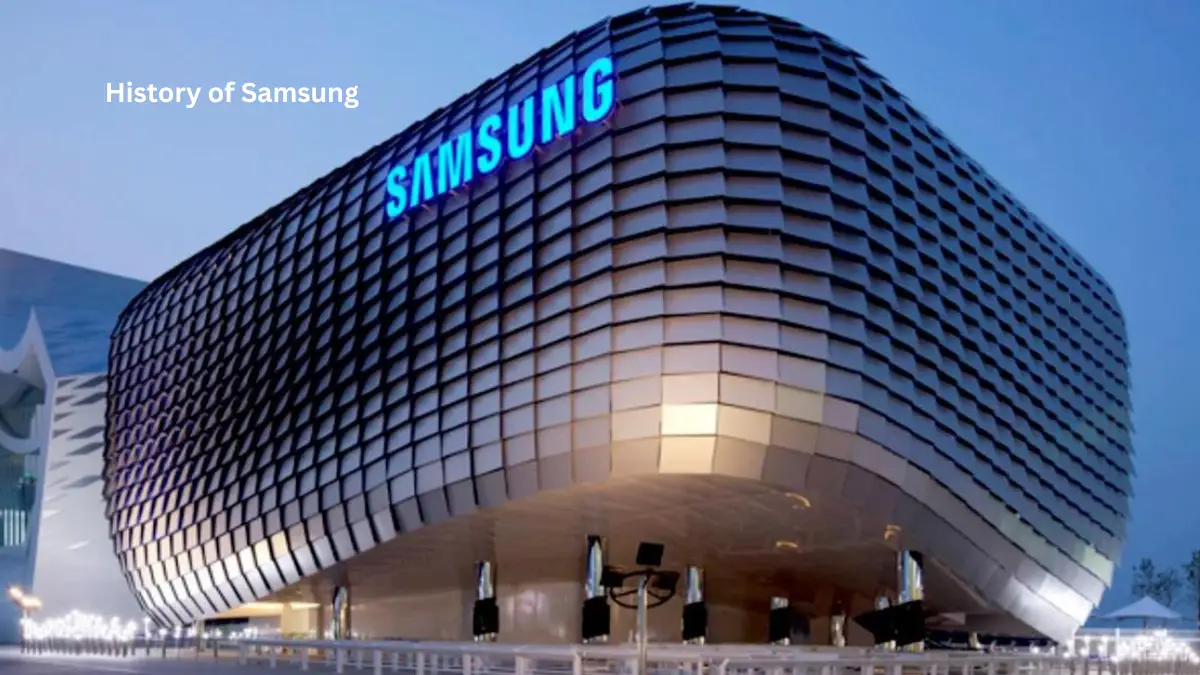
The Headquarters of Samsung:
The company has its main headquarters in Suwon in Samsung Digital City. It is located at 129 Samsung-ro, Yeongtong-gu. The 390-acre campus consists of 35,000 employees in 4 towers, with some being 38 stories high.
Here, Samsung Electronics started making black and white televisions in 1969. It has over 260,000 employees operating in 76 countries today.
Funny fact: not all Samsung phones are produced in South Korea these days. Vietnam earns over 100 million annually. India operates the largest single cell phone factory. South Korea produces less than 10% of the phones, but mostly to serve the domestic market.
Who Owns Samsung?
Samsung is still operated by the Lee family under the family-owned complex system of conglomerates in Korea. Its founder, Lee Jae-yong, has a grandson, Lee Jae-chul, who took over as the head following the health issues in 2014.
Samsung is the largest Korean conglomerate and owns:
- Samsung Electronics—the largest revenue-earning IT company in the world.
– The second largest shipbuilder in the whole world is Samsung Heavy Industries. - Samsung Life Insurance, the 14th largest globally.
- Samsung C&T and Samsung Engineering, major construction companies.
Samsung constitutes 17-23 percent of the GDP of South Korea. Another organization, Bloomberg, issued a report that Samsung Electronics contributed to the growth of South Korea by approximately half of its growth in a recent quarter.
The Real CEO of Samsung India:
Lee Jae Yu is the head of the international firm, but the large South Asian market is operated by a regional team headed by Samsung India. It has the largest mobile factory in India.
What Samsung Does?
Samsung does not just do phones and television sets. It manufactures electronics, home appliances, semiconductors, ships, insurance, construction, and engineering projects. It makes up a huge percentage of South Korean exports, approximately 20 percent.
Samsung Net Worth:
The value of Samsung varies depending on the market, but the sum of all its elements amounts to hundreds of billions. Samsung Electronics has always been rated among the most valuable technology companies in the world.
The company expanded from 1938, from just 25 to the South Korean Miracle on the Han River, which demonstrated how the nation transformed itself out of war to a global economy.
The Bottom Line
This is the story that demonstrates that you do not need Silicon Valley or plenty of capital to create a massive business. Lee Byung-chul began with a small loan in Daegu in the selling of fish and noodles. His grandson now owns a company that literally propels the economy of South Korea to power.
Its headquarters remain in South Korea. The Lee family keeps control. The model that is controlled by the family remains powerful. This is long-term thinking, starting with three stars to becoming a world icon. Other people are short-period thinkers.
In 2019, they shut their final Chinese manufacturing plant. There are no Chinese phones produced at all. They are made in Vietnam and India. The roots were planted in the country of origin, and the branches were fanned throughout the whole world.
It is the Samsung home country tale: 25 cents, dry fish, and the vision, that was expected to last as long as the stars Lee could see in 1938.
Related: iPhone Origin Country