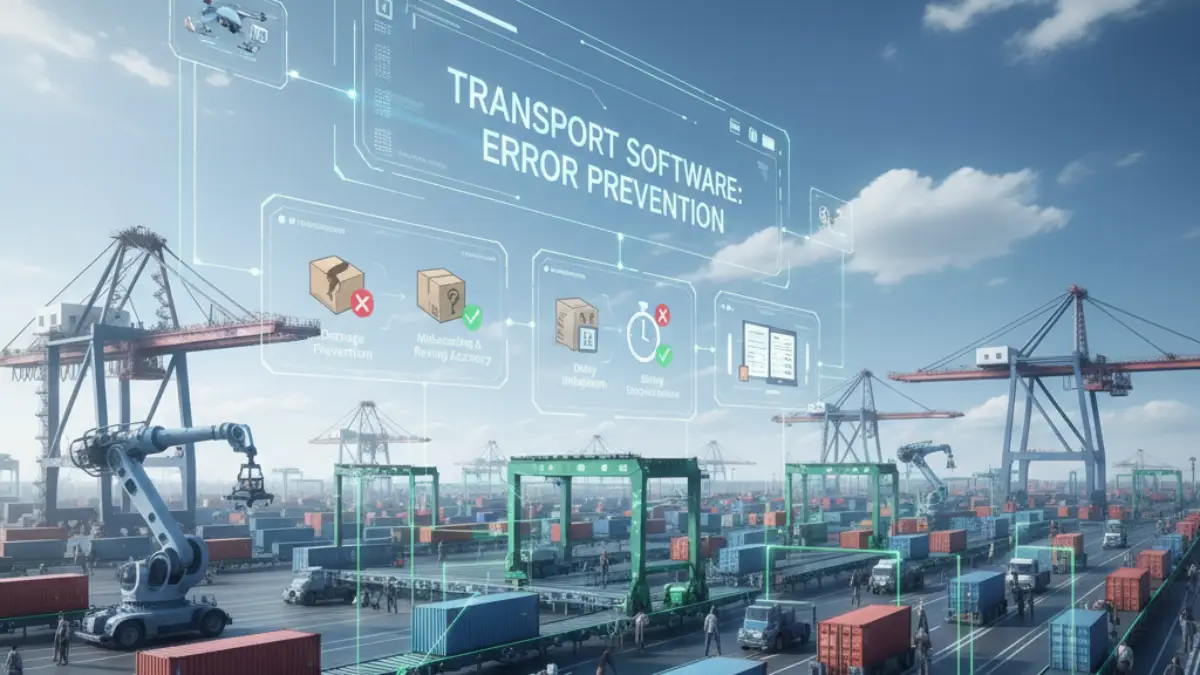

Shipping errors cost transport companies more than just cash. They ruin customer relations, fail to pay drivers for their time, and create unnecessary administrative headaches that take days to resolve. The worst part is, for the most part, all of these mishaps happen based on predictable patterns, wrong addresses, missed windows of time, incomplete paperwork, vehicles sent to improper locations. These aren’t random accidents. They’re typical gaps in information and communication that emerge when operations employ manual systems or disassociated software.
Where Most Mistakes Actually Begin
What surprises most people is that shipping errors occur long before delivery. They tend to manifest during the booking process or dispatch planning. Someone fails to enter a complete address. A special note for delivery doesn’t get passed to the driver. Two people book overlapping shifts on the same vehicle. The failure to deliver occurs only at the point when the driver cannot do their job and the issue is visible.
This concern gets worse with larger operations. A company with three vehicles and regular clients can keep this all-in-one person’s head, or at worst, a phone call. But once more vehicles and more distant routes come into play, and clients book through an online channel, there’s too much information for anyone’s memory. Yet common mistakes start to crop up at this point. However, modern logistics software can help reduce this problem by centralizing information and spotting discrepancies before vehicles leave the depot.
The Address Issue That Never Goes Away
Nothing causes delivery failures more than address mistakes. Customers fail to provide complete addresses. They abbreviate streets in manners that GPS systems don’t understand. They provide business names instead of real physical addresses. Sometimes they get the numbers entirely wrong.
Yet manual entry makes it worse. When people booking enter addresses into several fields, there’s ample room for typos or confused numbers. The driver realizes their error when they stand in front of a building that’s not even on the same street they should have been on, for all practical purposes, 10 miles away from their delivery point. Now the delivery is late, the customer is unhappy, and the rest of their day is thrown out of whack.
Better systems can validate addresses during the booking process. They check entries against mapping systems to flag blatant issues immediately. If someone puts in a postcode that doesn’t match the borough, or if a street number seems to be too far down the road to realistically exist, the system flags it while someone still has the opportunity to amend the information. This one minor check avoids a massive percentage of failed deliveries.
Time Window Incompatibilities No One Sees Until Too Late
Transport companies are often guilty of offering window deliveries they cannot achieve, but they’re not intentionally being dishonest. Instead, they lack visibility into how things work together. A person books a Tuesday morning delivery, not understanding that the same vehicle has three stops planned, all over town, on Tuesday morning.
This issue worsens with last-minute changes, too. A customer calls in to reschedule; the person booking happily accommodates; however, they fail to check if that day/time works with the driver’s existing arrangements. Or a rush job gets added last minute to a packed schedule, meaning afternoon deliveries are going to be delayed.
This isn’t the fault of the driver or booking systems, it occurs due to human error. Intelligent booking applications stop this from happening by showing realistic availability and travel times. When someone goes to book a time slot, if there’s already something in that time slot, or if traffic patterns suggest this will be impossible, the booking staff knows right away and can present an alternative that works instead of promising something the company cannot fulfill.
Documentation Issues Creating Compliance Headaches
Commercial shipping involves paperwork galore. Proof-of-delivery signatures, images of what was shipped, special certification for handling, international customs paperwork, all can get missed if drivers have to handle these themselves. An unwitting check mark omitted here or there, or documentation needed that travels with shipments but gets left behind all create issues.
These are not just annoying inconveniences. Missing documentation can delay payment, create liability concerns or compliance issues, some shipments cannot legally be completed without certain paperwork, meaning an attempted delivery thought successful gets rejected at a later point in time.
Digital systems can guide drivers through required documentation checks based on shipping conditions; the system knows what’s needed via shipping type and won’t allow a delivery to be marked complete until all required actions are taken care of first. This systematic approach eliminates casual oversights that occur when drivers are managing ten different jobs and trying to remember various requirements for each customer.
The Communication Breakdown Between Dispatch and Driving
Many shipping errors occur because information cannot adequately communicate between dispatch teams and drivers. A customer calls with a mis-delivery instruction; however, it doesn’t reach the driver in time. The driver meets an issue at delivery but cannot relay it back to dispatch immediately. These communication silos turn minor concerns into mammoth catastrophes.
Real-time connectivity solves many of these issues. Updated information heads straight to the driver’s device; changes to delivery instructions are given immediately; when drivers need to report an incident, or seek further clarification, they’re not trying to reach someone by phone while they’re at their customer’s doorstep trying to get back out on the road. The information flow happens rapidly with a paper trail.
Fewer Mistakes Without Slowing Down Operations
The best thing about better shipping systems is eliminating mistakes without adding extra steps to avoid them. Manual checks for errors slow everything down. Having managers review every job for potential problems creates bottlenecks instead of timely solutions. The right software can flag these errors behind the scenes without requiring extra action on anyone’s part.
Shipping solutions will always be somewhat complex and will encounter issues from time to time, but most common shipping errors follow patterns technology can help suppress. When systems check veracity of information, sync schedules where appropriate, guide drivers through necessary components, and keep communication clear, typical mistakes simply don’t happen as often. Operations run more smoothly, customers stay happier, and teams spend less time fixing issues that should have never manifested in the first place.