
I spend most of my time at a desk, writing—coffee by my side, a time limit on me, and no exercise whatsoever. And so I purchased a foldable walking pad, and I thought, what could go wrong? I did not make a fitness champion in 20 days. But some things surprised me.
The difference between foldable walking pads and the rest is as follows.
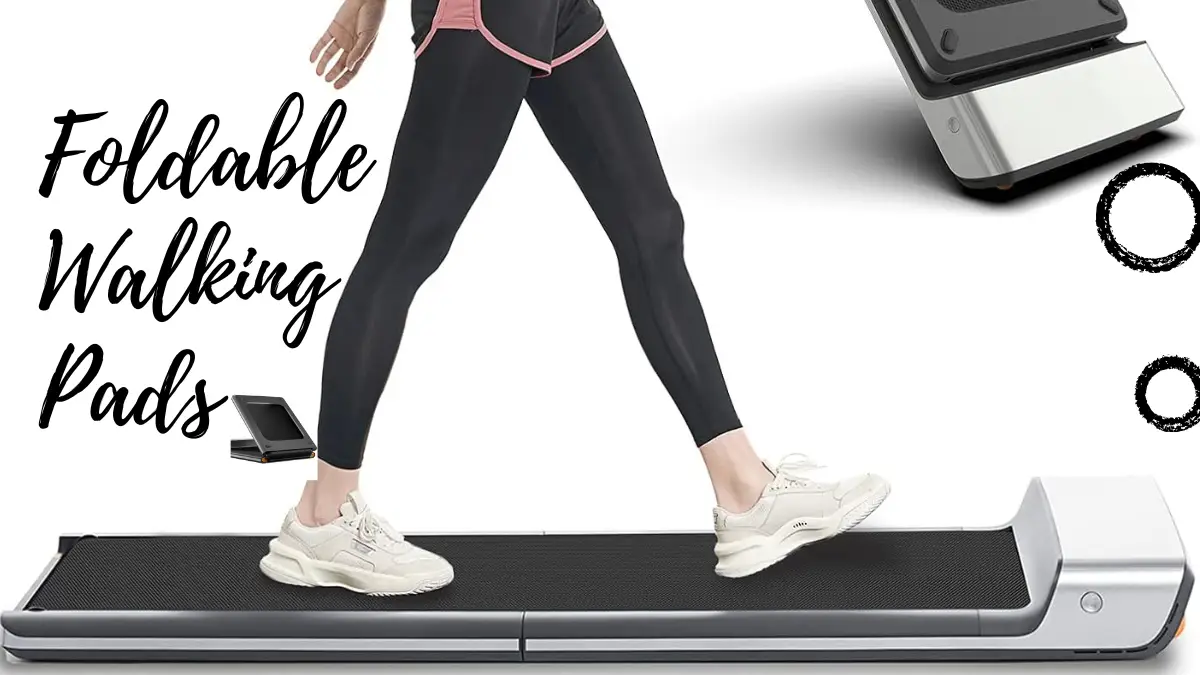
Folding walking pads are not mini treadmills. They are created to enable you to move without occupying a lot of space or disorganizing your office design. The majority of them fold to approximately 32 inches x 21.5 x 5.5 when closed. That is little enough to fit under your bed or lean on a wall. Mine is about 20 kg, i.e., heavy but not as cumbersome as regular treadmills that weigh 35 kg and above. They reach a climax of 34 mph; thus, you are not running but rather training to run a marathon. That’s the point.
My First Week
On the first day, I placed it on my standing desk. It took about 90 seconds. I pressed the remote and started at 1 mph after taking the plug in.
Then I tried typing.
Bad idea. My fingers hit the wrong keys. It was like texting on top of a rocky bus. Typing and walking is something one needs to train on, yet I did not imagine that I would feel that inept.
Here’s what worked better:
- Responses via email: Unchallenging at 1.5 mph.
- Video calls: Ideal—no typing, only talking.
- Reading articles: In fact, terrific when it comes to focus.
- Writing drafts: Nope. Had to stop moving.
At the end of the week, I was able to walk at 2 mph when making a call or performing small tasks. Any object that required accuracy, I put the pad on hold.
The Portability Myth
According to the advertisers, these are portable. Technically true. In reality? Not so much. It has the motor at the front; hence, it is front-heavy and difficult to lift. The handle discloses but does not clasp. And the wheels do not go round but push and pull. It is more of a workout to move it around tight corners. I permanently kept mine under my desk. It takes comparatively less than a minute to set up, and there will never be a storage issue anymore.
Does it really burn calories?
Yes. It is life changing. At a medium speed of 2-3 mph, you use about 200-300 calories an hour. More than half a thousand calories per working day when you walk. I tracked my steps. Previously to the pad, I used to walk 3,000–4,000 steps a day. With the pad I did 7,500–8,000 steps. The additional 4500 steps will be equivalent to what the office workers receive due to these devices. I lost about 1 kg in 20 days. Nothing spectacular, though I was not eating it hard. When used by other users, walking pads along with improved dieting result in the reduction of about 10 kg in a few months.
What I Actually Liked
It took me by surprise, the blood-sugar advantage. During the afternoon after lunch, I used to take a 25-minute walk, and I could never get aware of any crash after the meal. Research indicates that postprandial (after-meal) walking can reduce glucose surges by 20-30%. It was kept only then because of that reason.
The noise level was fine. At 3 mph, my pad produces around 55 dB, which is relatively quieter than I thought. It did not interfere with calls or bother the neighbors.
It’s low‑impact. My knees feel fine. Running would not cause any joint stress. Magnificent for those who do not want to experience high-impact cardio.
The Stuff Nobody Tells You
- Setting up ergonomics matters. Put the monitor at eye level. Maintain a 90-degree elbow position at the keyboard. Otherwise you will stoop and break your neck.
- Everything cannot be multitasked. Serious writing or coding? Forget it. Keep the pad until you can work on easier stuff.
- It is not a substitute for the treadmill. Most models have no incline options. Speed stops at walking pace. You must have a treadmill in case you wish to run.
- You’ll miss outdoor walks. No vitamin D. No fresh air. No scenery changes. Strolling outside remains the best in terms of mental health.
Who Should Buy One?
Use a folding walking pad provided you:
- Sit 8+ hours a day at a desk
- Difficult in achieving 4,000 steps per day
- Low space with regard to fitness equipment.
- Desire to be mobile when making calls and in meetings.
Skip it if you:
- Already exercises outdoors often.
- Can fit a full treadmill and desires to be able to run.
- Requires severe cardio work.
- Will not use on a regular basis (it will merely end up being costly furniture)
Price Reality Check in India
In India, walking pads cost between 9,999 rupees and 45,999 rupees. Entry options such as Sparnod or LETS Play cost about 12,000-15,000 rupees. Lifelong or PowerMax mid-range picks are priced at approximately 20,000 rupees to 35,000 rupees.
For someone who sits all day? That’s decent value. In a few weeks, you would be feeling more energetic and productive.
My Verdict After 20 Days
I kept using it. That’s the real test, right?
It did not make me more fit. But it has made me move when I would be sitting on my chair all the time. My step count doubled. I felt less sluggish. Crashes of post-lunch energy were eliminated.
Is it perfect? No. Its portability is exaggerated; typing on the go is incredibly difficult to learn and will not be comparable to outdoor running.
But for a desk‑bound writer? It’s a solid tool. Simply do not think you will become a magic user overnight, you just have to take more steps, be more concentrated, and get a little looser pants in case you do it.
The catch? You have to actually use it. Some rolled-up cushion under your bed will not do anything except collect some dust.