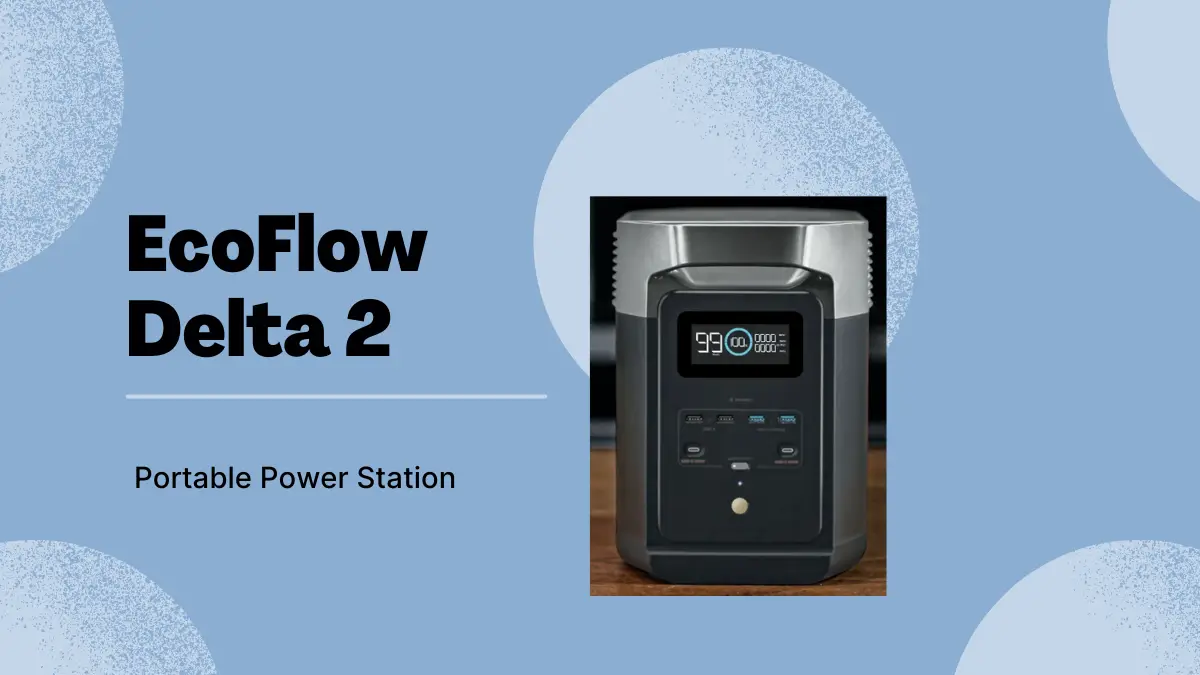


I’ve tried far too many so-called revolutionary portable power stations, and I recognize when they’re selling and delivering more than is being promised. To check whether solar charging is effective indeed or just another pricy battery box, the EcoFlow Delta 2 was all around, and I had to purchase that, too.
What You’re Actually Getting
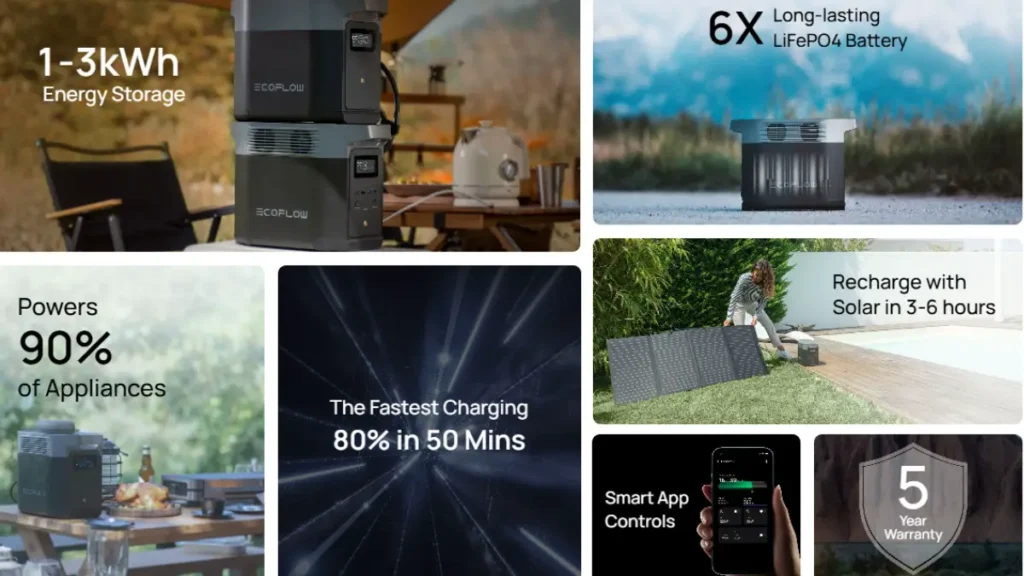
The Delta 2 has 1024 Wh of energy and lithium-iron-phosphate (LFP) batteries. It would imply that it has a much longer lifespan than the majority of lithium-ion-based systems. It is dischargeable to a capacity of 3,000 times, then it decreases down to an 80 percent capacity—just to say it plainly, you can charge it eight years day in and day out.
I observed that it is capable of discharging 1,800W continuously and 2,200W during start-up. It should be good enough to power a fridge, a microwave, a laptop, and a phone simultaneously. I used it to run a 150W mini-fridge for approximately 12 hours with a full charge.
Solar Charging: What the Real Story is.
Let’s drop the hype. Can this be charged using solar panels? Yes, but there’s a catch.
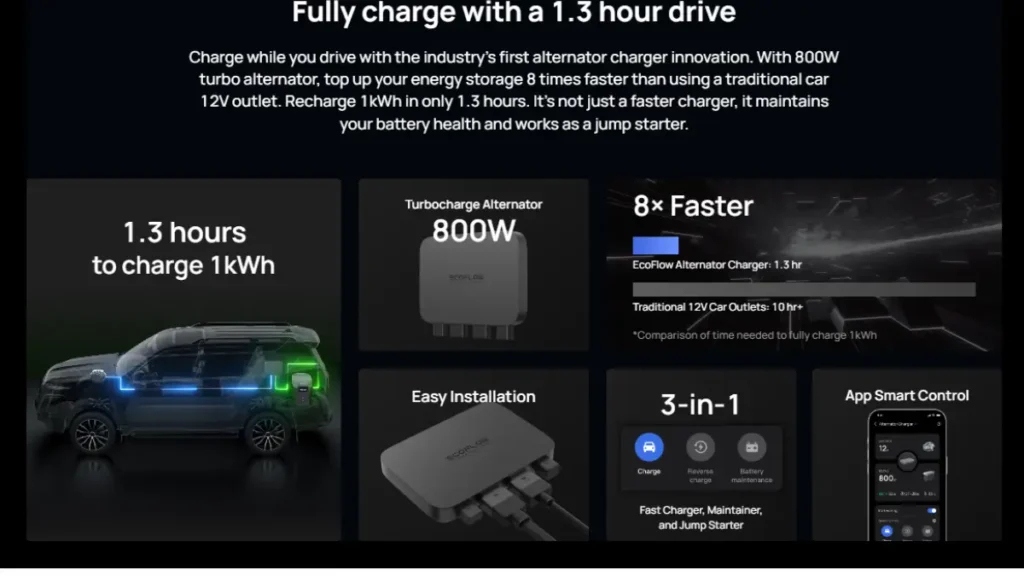
I took 220 W panels (not supplied, estimate 25000-40000). Clearly, it was sunny, and I received approximately 200 W on a clear, sunny day. It took approximately 3.5 hours to reach 20 to 80 percent charged. That is good; however, it is 50-100 W on cloudy days only, so the same charge will require 8-10 hours.
It performs at its best with the X-Stream AC charger, which charges up to 80% in 50 minutes using a wall outlet. Solar will enable you to take longer offline and will not consider it as the primary way to charge your devices, except when you have unblemished sunlight, as in Rajasthan.
The Performance vs. Price Question.
Provided you are not spending money recklessly, this makes people worried. The Delta 2 costs roughly ₹80,000-₹90,000 in India (it might go as low as ₹70,000 at times). The comparable model offered by Jackery is approximately 100 less but also slows down in charge speed and has fewer ports.
What you’re getting:
- Quick charge: 50-minute charge time.
- Expandability: Up to 3 kWh of battery expansion.
- App control: You can check the phone for monitoring.
- Port variety: 15 output options (USB-C, AC, DC, you name it)
Is it worth it?
It depends. It may be excessive on a weekend camping trip, and you charge only with the help of a car. When it is off-grid or has serious backup power, it is worth the price.
What It Actually Powers
I had actual tests since specs are deceptive:
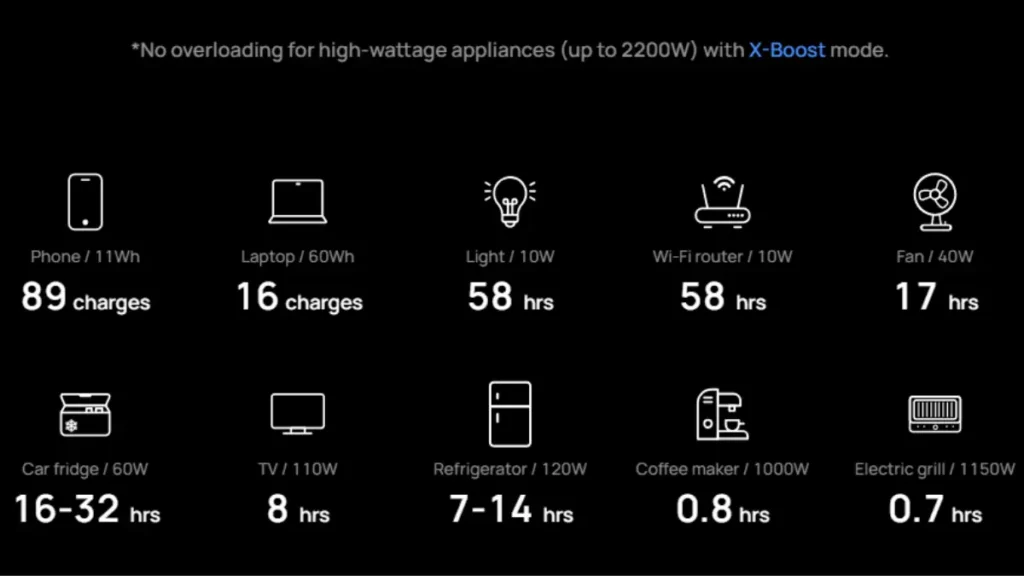
| Device | Runtime (Full Charge) |
|---|---|
| Mini-fridge (150W) | 12 hours |
| Laptop (65W) | 16 full charges |
| Smartphone | 89 charges |
| Coffee maker (1200W) | 45 minutes |
| LED lights (10W) | 58+ hours |
Expect 7 -14hours depending on the model, assuming that you run a full-size fridge. I had tried it during a 6 hour outage- it maintained my necessities running well.
The Honest Downsides
No product is perfect. What annoyed me:
- It is noisy and fast-charges the fan. Not loud with jet engines, but heard in an oddly silent room.
- Solar requirements: To take a multi-day off-grid vacation, you require a serious solar. The refrigerator that runs 24/7 cannot be supported by one 220 W panel.
- Weight: 27 pounds. It is not a light backpack but is an item that is portable.
- Price creep: You may require an additional battery (about 80,000 rupees or more), improved solar panels (about 35,000 rupees or more), and a smart generator when it is time to go away (about 85,000 rupees or more). It may very easily cost more than 2 lakh rupees.
- Suffering import taxes: When you shop abroad, please keep in mind that there will be customs and GST charges included. Purchasing at local dealers at the authorized price is more expensive but might help to avoid many headaches.
Who Should Actually Buy This
You’re a good fit if:
- You will require a decent backup power in case of the interruptions (internet, fridge, hours-gadgets).
- You are into the van life or overlanding and seek quick charging.
- You need to have expansion without having to replace the entire system.
- Solar is a good addition, but not a requirement.
Skip it if:
- You just bill phones and tablets (find something cheaper).
- You must have actual weekday solar independence with no AC charging.
- You have a tight budget, and you do not require the speed.
My Take After Three Months
The Delta 2 works as EcoFlow offers; it is fast, reliable, and open to scaling up. Solar charging is something that works, although it is not the priority. Consider solar as a backup as a whole as opposed to your first line of power.
It is worth the money for tech lovers who wish to have the best portable power station. To satisfy the budget customers who do not require super-fast speed, the lower-priced Jackery products should be considered.
On what occasions will you actually use it? Savings are suggested in case it hangs in the range of 11 months a year. However, when power outages are frequent or you are often off-grid, this kind of thing will pay even in its own peace of mind. The problem is that to live on solar only you will need to purchase a substantial amount of panels, and that scenario is what most YouTube reviews do not consider.